Brain tumor AI contouring,
integrated into radiotherapy workflows
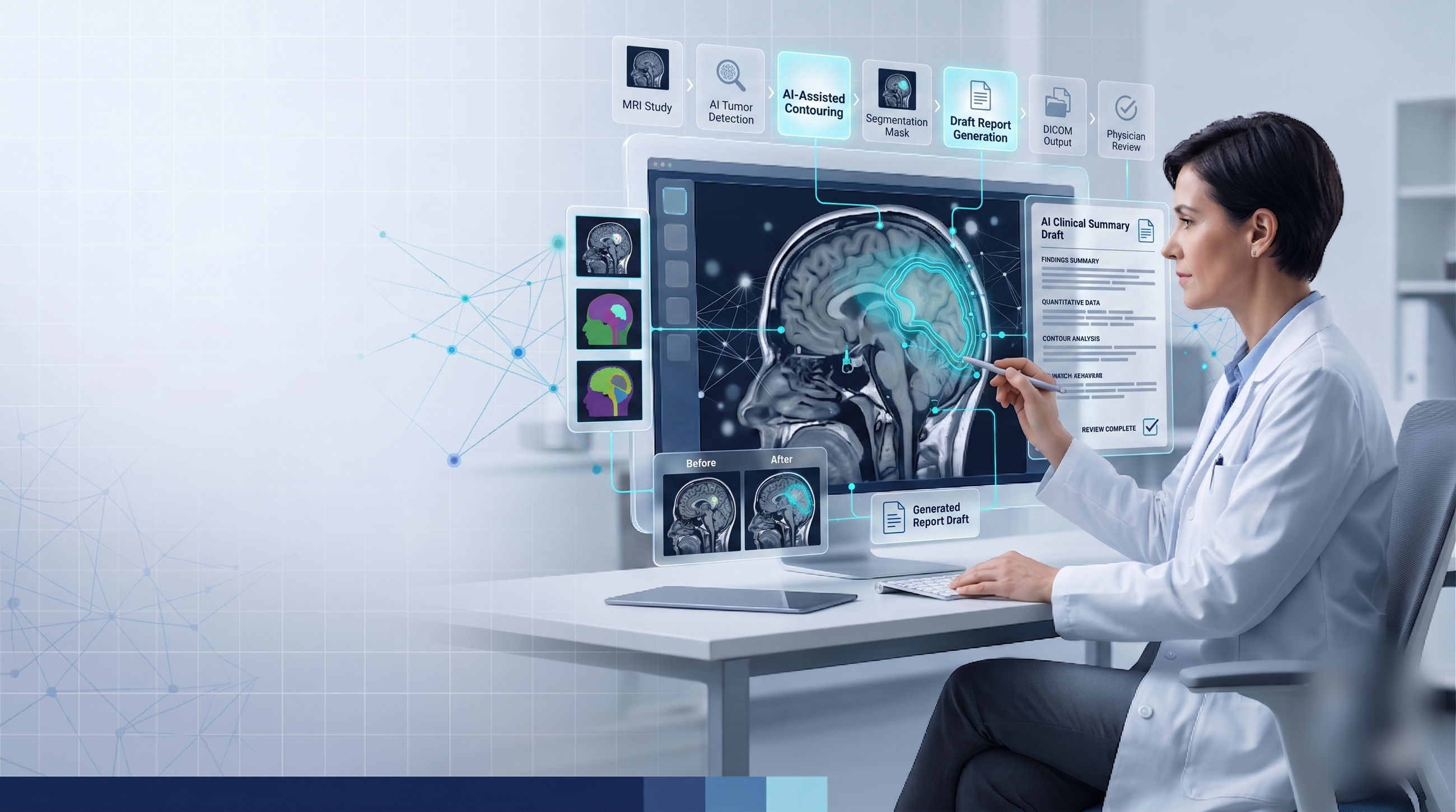
DeepBT Detector-Plus generates preliminary tumor contours and returns them as standardized DICOM to PACS / TPS, where physicians review, confirm or modify the results to support radiotherapy planning.
- FDA 510(k) · K252190
- TFDA Class II device
- DICOM PR / RTSS
One platform, one flagship application
Liger MedAI Platform × DeepBT® Brain Tumor AI
AItewan is building a regulated medical-imaging AI infrastructure that bridges AI research, clinical workflow and hospital-scale deployment — with the Liger MedAI Platform as the integration backbone and DeepBT® as the flagship brain-tumor AI application, moving imaging AI beyond standalone algorithms into real clinical operation.
Three bottlenecks in brain tumor radiotherapy workflows
Why contouring and workflow integration matter
Manual contouring is a heavy workload
Brain-tumor contours are still largely drawn slice by slice — repetitive, time-consuming, and especially demanding in multi-lesion cases.
Cross-system exchange is complex
Images, structures and plans live across PACS, viewers and TPS; without standardized exchange, workflow burden grows.
AI must fit the existing review flow
If AI results cannot return to the familiar TPS review environment as standard DICOM objects, their value is greatly diminished.
An AI-assisted contouring system built for clinical use
DeepBT Detector-Plus · key capabilities
AI-Assisted Tumor Contouring
Generates preliminary contours for diagnosed adult brain tumors as a starting point for physician review.
Explore DeepBT Detector-PlusThree Cleared Tumor Types
Brain metastases, meningiomas and acoustic neuromas.
Bi-parametric MRI
Supports T1W+C and T2W inputs.
Standardized DICOM Output
DICOM PR / RTSS connects to PACS and TPS.
Physician-Led Review
Every result is confirmed or modified by qualified medical professionals.
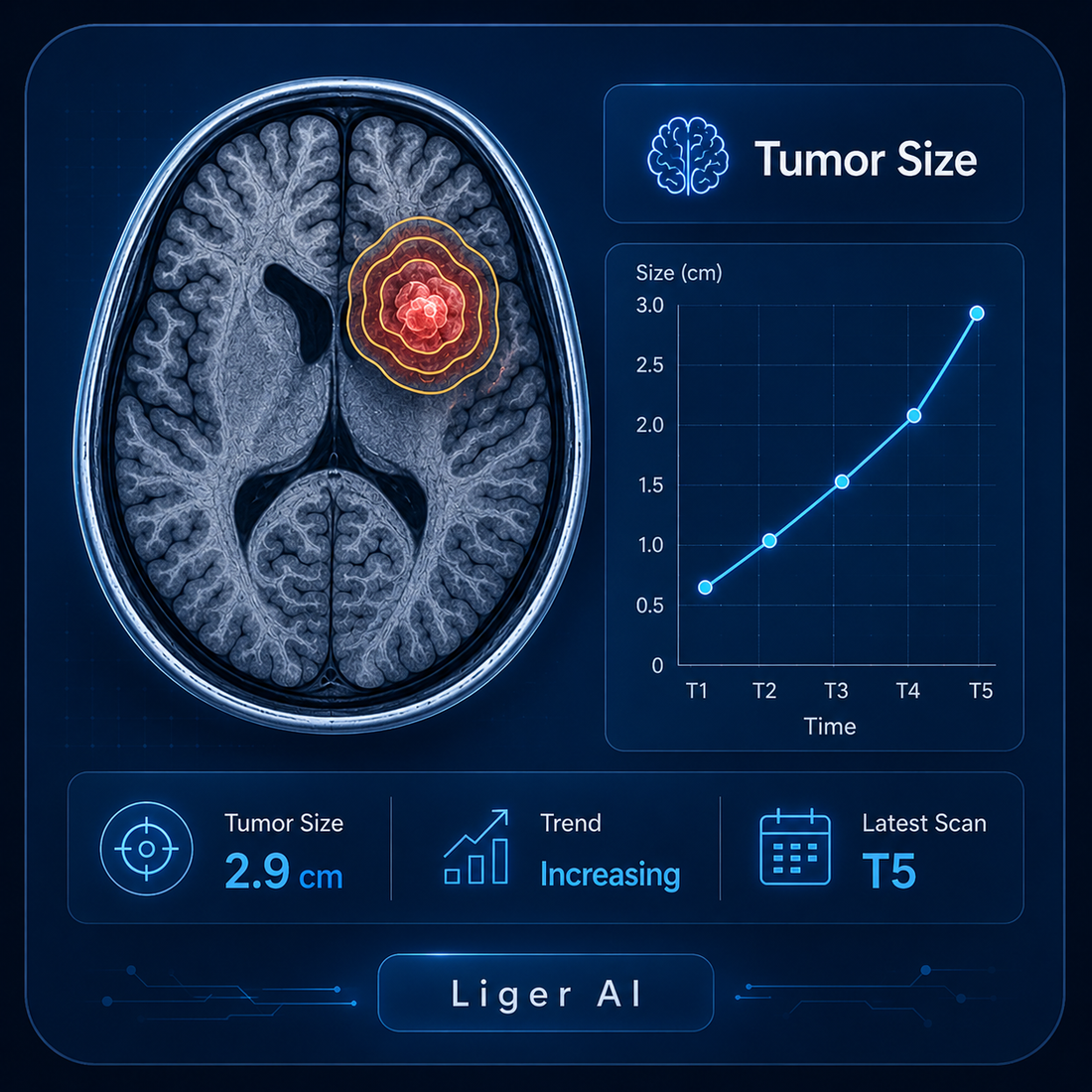
Longitudinal Quantification
Provides objective quantitative references for tumor-volume changes.
A six-step workflow from MRI to treatment planning
From MRI to treatment-planning support
- 01
MRI Study
Eligible brain MRI
Eligible T1W+C / T2W MRI of diagnosed adult brain tumors.
- 02
PACS / TPS
Existing systems
Image data are retrieved from existing PACS or treatment planning systems.
- 03
DeepBT AI Inference
AI-assisted analysis
AI inference generates preliminary contours for the cleared brain tumor categories.
- 04
DICOM PR / RTSS Output
Standardized DICOM
Standardized DICOM Presentation State and RT Structure Set objects are exported.
- 05
Physician Review
Review · Confirm · Modify
Physicians review, confirm or modify AI results in the viewer or TPS.
- 06
Treatment Planning Support
RT planning preparation
Confirmed contours serve as a reference for radiotherapy planning preparation.
Core technology from image analysis to clinical integration
AI segmentation · Lesion detection · Workflow integration · Structured reporting
DeepBT integrates deep-learning brain tumor image analysis into clinical workflows, helping teams produce preliminary contours and quantitative references. All AI results are preliminary references and must be reviewed, confirmed or modified by qualified medical professionals.
Deep-learning brain tumor segmentation
Deep learning performs tumor detection and preliminary segmentation on T1W+C and T2W MRI.
Multicenter retrospective validation
Standalone performance was evaluated on multinational, multicenter retrospective data, with ground truth established by board-certified radiologists.
DICOM-native clinical integration
Standard DICOM PR / RTSS flows into existing PACS / TPS without changing the physician's working environment.
SaMD system architecture
Model management, background inference and result return are designed to medical-device software standards.
 AI Analysis · For Review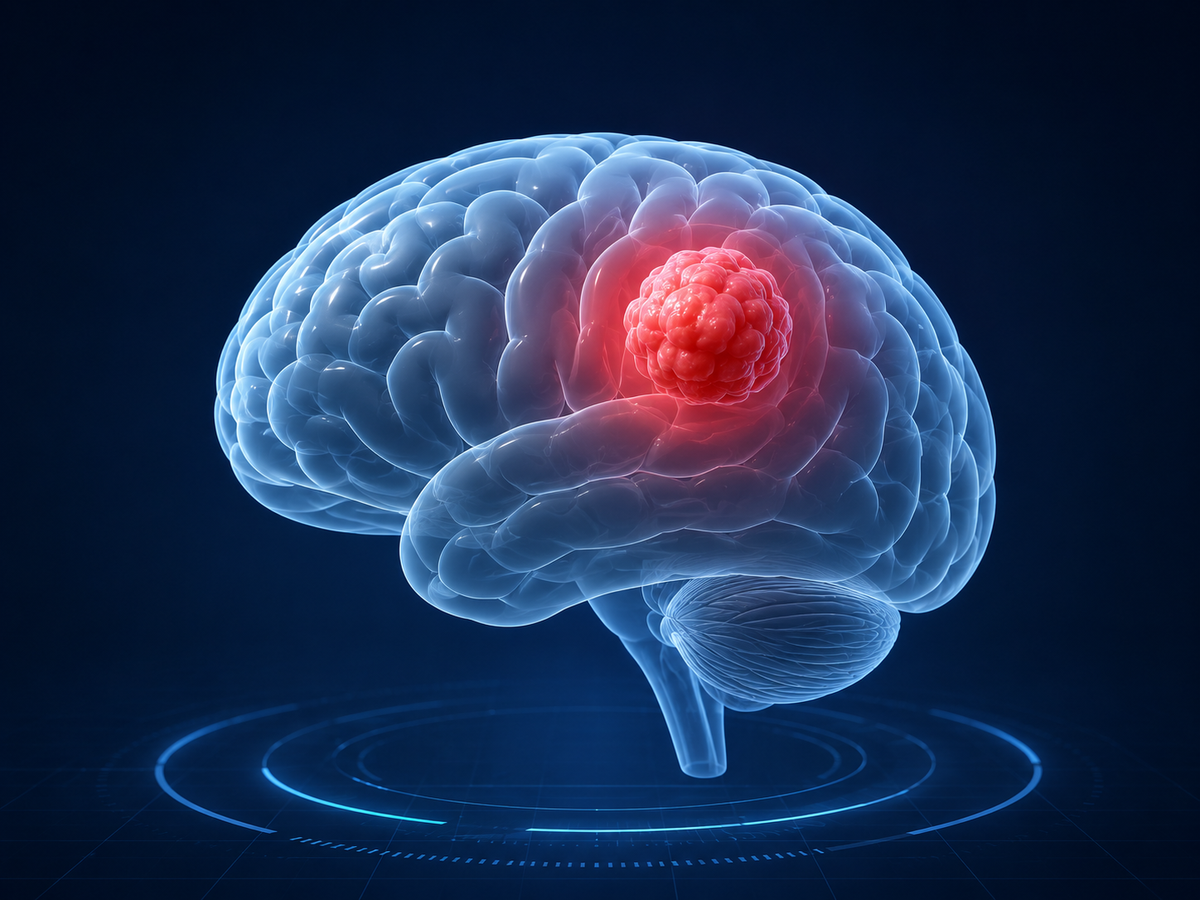
Why hospitals and partners trust DeepBT
Cleared, validated, built on real clinical experience
A brain tumor AI medical device cleared by the FDA and TFDA
U.S. FDA 510(k) Clearance
U.S. FDA · K252190 · 2026-04-10
TFDA Class II Registration (Analysis System)
Taiwan FDA, MOHW
TFDA Class II Registration (Detection System)
Taiwan FDA, MOHW
Future Tech Award
National Science & Technology Council
Scale of the multinational, multicenter retrospective validation dataset
136
Clinical cases
360
Tumors
16
Institutions
6,500+
Training MRI studies
3
Board-certified radiologists
Standalone performance figures such as sensitivity and Dice are presented on the full clinical-validation page and require regulatory, clinical and QA review before formal publication.
Full regulatory milestones, clinical validation, hospital deployment and patent portfolio
Clear next steps for every stakeholder
Built for clinicians, hospitals, SaMD teams and partners
Regulatory expertise backed by real AI SaMD clearance experience
From product development to regulatory clearance
We bring hands-on experience taking our own AI SaMD products from development and hospital deployment through clinical validation to TFDA and U.S. FDA 510(k) clearance, helping medical-AI teams reach clinical deployment.
- We do not just know the regulations — we have cleared an AI SaMD ourselves
- We do not just write documents — we understand clinical workflows and DICOM integration
- We do not just consult — we help build product strategies that actually ship
- Hands-on TFDA, FDA, ISO 13485, cybersecurity, IP and market-access experience
Bring brain tumor AI into clinical workflows with AItewan
Whether you are a healthcare institution adopting AI-assisted contouring or a medical-AI team seeking SaMD regulatory support, we can help from product planning and clinical workflow integration through regulatory clearance.